

iXon Life 897 EMCCD
View Product
 Part of the Oxford Instruments Group

Charge-coupled device (CCD) cameras laid the foundation for modern scientific imaging and defined standards for sensitivity and image quality across microscopy and spectroscopy for decades. This includes specialised CCD technologies such as EMCCD, which were developed to address the most demanding low-light applications.
Over the past decade, however, sCMOS cameras have become the main detector technology for many scientific imaging applications. By combining speed, low noise and wide fields of view, sCMOS detectors have reshaped microscopy and quantitative imaging and pushed most traditional CCDs out of the spotlight. Yet one specialised type of CCD camera has remained highly relevant: The electron multiplying CCD (EMCCD).
But why do EMCCD cameras still matter, especially when sCMOS technology continues to advance?
In this article, we highlight 10 things you may not know about EMCCD cameras, explaining their unique capabilities and the situations in which they continue to outperform even the most advanced sCMOS detectors.
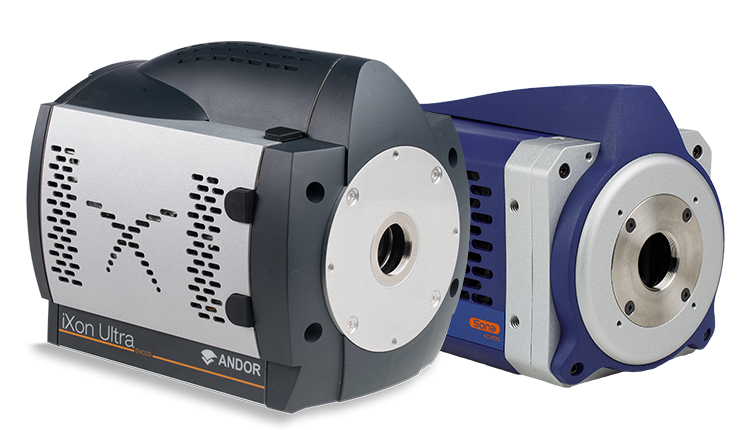 Figure 1: Oxford Instruments iXon Ultra EMCCD camera and Sona sCMOS camera.
The detection limit in low-light imaging is primarily determined by the camera’s noise floor, which at short exposure times below one second is dominated by read noise. Although modern sCMOS cameras offer increasingly low read noise, sometimes down to 1 e⁻ rms, EMCCD cameras continue to deliver superior detection performance for weakly expressed or low-abundance fluorophores in confocal, TIRF, and other light-starved applications.
EMCCD sensors incorporate an additional electron-multiplication (EM) gain register, where controlled high-voltage pulses amplify the signal by several orders of magnitude. This amplification raises the signal well above the read noise introduced during subsequent readout processes, making the read noise effectively negligible relative to the amplified signal.
The serial readout architecture of EMCCD sensors also ensures highly uniform pixel response, minimising fixed-pattern noise, which can become problematic when sCMOS sensors operate close to their detection limits.
EMCCD cameras such as the iXon Ultra EMCCD uniquely allow photon counting operation, enabling the highest probability of detecting individual photons. This makes them particularly well suited for biophysics and quantum research, where experiments often operate at extremely low photon levels, sometimes down to a single photon per pixel. As a result, EMCCD technology remains the preferred choice for researchers who require maximum sensitivity.
Compared to sCMOS sensors, EMCCD cameras have relatively large pixels, which plays a significant role in their high sensitivity. Simply put, a larger pixel acts as a larger collection area, capturing more photons and therefore enabling a higher signal-to-noise ratio.
EMCCD cameras typically have pixel sizes of 13 or 16 µm, whereas most popular sCMOS sensors have pixel sizes of 6.5 µm or smaller. The trade-off of the larger EMCCD pixel size is reduced spatial sampling, meaning that the pixels are too large to provide fine detail when used at lower magnifications, such as 40x or 20x. Where finer detail over large fields of view is required, sCMOS is therefore often the better choice.
EMCCD cameras are instead optimised for photon collection in high-magnification, light-starved applications such as single-molecule biophysics and weak fluorescent labelling in confocal microscopy.
Although EMCCD cameras are often described as having “effectively zero” read noise, their actual read noise can be relatively high, typically in the range of 100 – 180 e⁻, compared with around 1 e⁻ rms for modern sCMOS sensors.
The reason EMCCD cameras can still outperform sCMOS in sensitivity lies in the EM gain register.
Before readout, the incoming signal is amplified by the EM gain register by several orders of magnitude. This amplification raises the signal to a level where the read noise, which, although still physically present and higher than that of sCMOS, becomes negligible relative to the amplified signal.
As a result, the effective read noise, the parameter that ultimately limits detection performance, has been estimated in published literature to be below 0.3 e⁻ rms.
As frame rates increase and exposure times shorten, fewer photons reach the sensor, making it increasingly difficult to achieve sufficient signal-to-noise with conventional high-speed detectors. EMCCD cameras maintain effective sensitivity at high frame rates as EM gain amplification increases signal-to-noise levels and enables detection of even very faint signals.
This makes EMCCD technology particularly suitable for dynamic, low-light applications such as neuroimaging and studies of protein–protein interactions.
In fast, low-light experiments, the small number of photons available often pushes signal levels below the detection limits of high-speed sCMOS cameras. In addition, operating sCMOS sensors in their fastest modes can significantly increase their noise floor, raise aberrant pixel behaviour, and reduce dynamic range.
Techniques such as cropping or binning may improve detector performance but are not always sufficient to achieve signal-to-noise levels needed for reliable analysis.
In contrast, the EM gain register in EMCCDs can amplify even small numbers of photons before readout without a corresponding increase in noise. This enables effective detection at high frame rates under extremely photon-limited conditions. The only trade-off when increasing frame rates in EMCCD cameras is a reduced field of view.
EMCCD sensors are available with specialised coatings that deliver high quantum efficiency from the blue through to the near-infrared (NIR). In contrast, sCMOS cameras are typically optimised for commonly used fluorophores such as GFP, with peak sensitivity between 460-620 nm and a rapid decline in response outside this range.
EMCCD technology remains the preferred choice for applications requiring high sensitivity beyond the visible range. Enhanced red sensitivity is particularly beneficial for imaging thicker tissues, where reduced scattering and lower autofluorescence are critical. EMCCDs such as the iXon Ultra EMCCD camera offer tailored sensor coatings that enhance detection from the blue to the NIR.
Most recently, the iXon Ultra Blue was introduced to deliver exceptional performance in the blue region of the spectrum, supporting demanding applications such as ion-trap quantum computing.
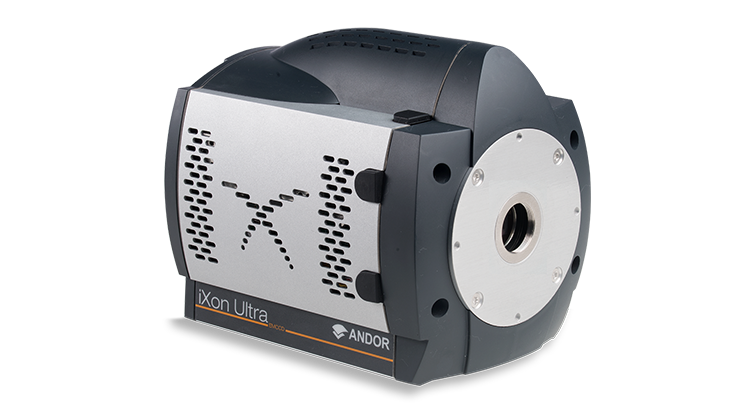 Figure 2: The iXon Ultra, Oxford Instruments' high-performance EMCCD camera.
When EMCCD cameras were first introduced, two key concerns were raised about the new technology:
These concerns have since been fully resolved in iXon EMCCD cameras.
EM gain linearity
RealGain™ ensures accurate EM gain linearity by precisely mapping the true EM gain, defined as the absolute signal multiplication factor, to the camera output. This provides consistent and reliable performance over time.
EM gain ageing
iXon EMCCD cameras incorporate proprietary design features that minimise EM gain drift to a level that it is not a factor under normal operating conditions. After more than 20 years and thousands of cameras in heavy use, no iXon EMCCD has become unusable due to EM gain ageing.
Learn more here: What Is EM Camera Gain Ageing in EMCCD Sensors?
Increasing imaging speed is a common experimental requirement, and reducing the active imaging area is a well-established way used to achieve higher frame rates without compromising sensitivity and other imaging parameters. Beyond standard digital cropping, iXon EMCCD cameras offer optical masking to further increase speed by limiting the illuminated sensor area itself.
Digital sensor cropping is a well-known and highly effective way to boost the imaging speeds of both sCMOS and EMCCD cameras. Achievable frame rates depend on whether the data rate is limited by the sensor, the data interface of the computer (e.g. USB or CoaXPress), or the camera digitisation rate (e.g. 8, 12 or 16 bit data).
Optical masking is a less widely known technique that can deliver even higher frame rates by physically preventing light from reaching areas of the sensor outside the region of interest (ROI). In iXon EMCCD cameras, this is implemented using a device called “OptoMask”, which can increase frame rates by up to threefold for certain ROI sizes compared with standard crop mode.
EMCCD cameras are sometimes perceived as more complex than sCMOS cameras due to their association with advanced imaging systems and the wider range of settings. In practice, however, modern EMCCD models such as the iXon Life 888 are not significantly more difficult to operate than other scientific cameras, and routine use requires consideration of only a small number of key parameters.
Most perceived complexity associated with EMCCD cameras arises from the overall imaging system and the way camera parameters are implemented in the acquisition software, rather than from the camera technology itself. The main parameter that needs to be understood is EM gain, which simply needs to be set to an appropriate level.
As a general guideline, EM gain should be set to approximately four to five times the read noise, typically corresponding to values between 250 and 400 for most fluorescence microscopy applications. Once the EM gain is set, exposure time can be adjusted to achieve the desired image quality.
If the EM gain is too low, the signal will not be sufficiently elevated above the noise floor, reducing image quality and detection efficiency. Selecting an EM gain higher than necessary reduces the dynamic range available but does not damage the sensor.
Oxford Instruments’ OptAcquire feature can automatically configure multiple EMCCD parameters based on the application, such as optimising settings for maximum speed or highest sensitivity.
Different imaging modalities place very different demands on detector performance. Fluorescence-based imaging typically requires short exposure times of 50-500 ms, while luminescence-based imaging relies on much longer signal integration times ranging from seconds to many minutes. These contrasting requirements often make it necessary to use different cameras for different applications.
sCMOS cameras are optimised for sensitivity and high imaging speeds, making them well suited to short-exposure imaging. However, even in deep cooled models such as the Sona-6 Extreme, thermal noise limits exposure times to approximately 10 - 20 seconds.
In contrast, EMCCD cameras such as the iXon Ultra EMCCD can be configured to operate in two distinct modes. For fast fluorescence imaging, it offers high readout speeds combined with EM gain to maximise sensitivity at short exposures. For long-exposure experiments, the camera can be operated in a slow-scan CCD mode which, when combined with deep cooling, minimises thermal noise and enables optimal performance in luminescence experiments.
As a result, the iXon Ultra offers a “two cameras in one” flexibility for both very fast imaging and very slow, long-exposure experiments.
No. While the electron-multiplication gain of any EMCCD can be set to unity (EM gain = 1), this does not make all EMCCDs suitable for operation as a conventional CCD. CCD-mode operation typically requires a sensor design with a separate conventional output amplifier to bypass the EM gain register, as this may introduce additional noise sources over longer timescales. Only EMCCDs that have been designed with long-exposure applications in mind can therefore provide genuine CCD-mode performance.
The iXon Ultra EMCCD includes a dedicated CCD mode that is well suited for long-exposure imaging. It also incorporates a mechanical shutter, which is beneficial for controlling light reaching the sensor and for accurate background subtraction. Other models do not provide this functionality.
Note that the iXon Life EMCCDs do not include a CCD mode or a mechanical shutter, as this product family is optimised exclusively for fluorescence microscopy applications where EMCCD operation is required.
EMCCD cameras are sometimes perceived as mature or even legacy technology. In reality, EMCCD remains an actively developed detector technology, with ongoing improvements in performance, usability, and application-specific optimisation for measurements demanding outstanding sensitivity.
Over time, EMCCD development has focused on refining key parameters such as sensitivity, speed, stability, spectral response, and ease of use. A clear example of this continued evolution is the iXon 897, the most widely installed EMCCD camera worldwide. Although the camera name has remained largely unchanged, successive updates have improved readout speed, sensitivity, and image quality, and this optimisation continues.
The iXon Life series represents a significant advance for the life science market by bringing EMCCD costs closer to that of back-illuminated sCMOS detectors. This makes EMCCD technology accessible to a broader range of users and laboratories.
More recently, the introduction of the iXon Ultra Blue EMCCD has delivered exceptional detection efficiency in the blue region of the spectrum, addressing emerging requirements in applications such as ion-trap quantum computing.
Together, these developments highlight a key point: EMCCD technology continues to evolve in parallel with scientific needs and remains highly relevant for applications where ultimate sensitivity and specialised spectral performance are critical.
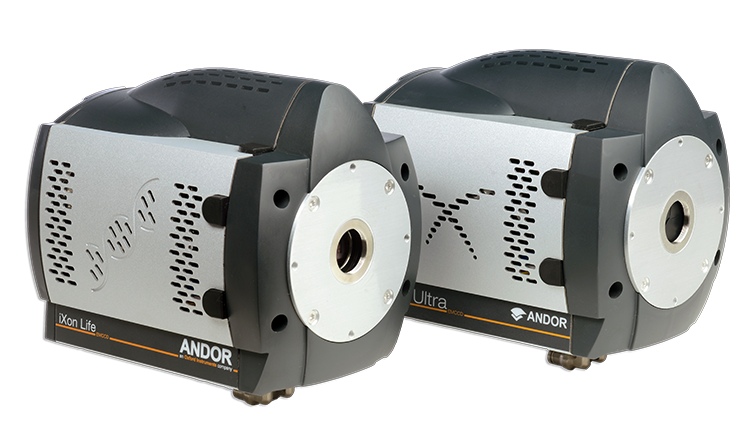 Figure 3: The iXon Life and iXon Ultra Blue EMCCD camera lines, developed to advance EMCCD applications across research fields.

© Oxford Instruments 2026

