Part of the Oxford Instruments Group
Expand
sCMOS Cameras

Andor CB2 sCMOS Series

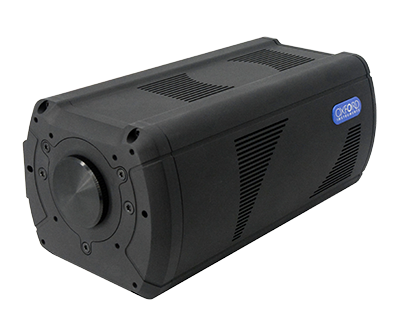
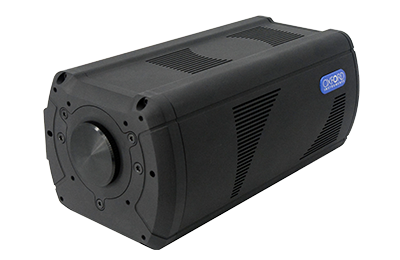
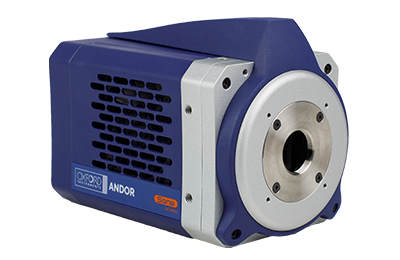
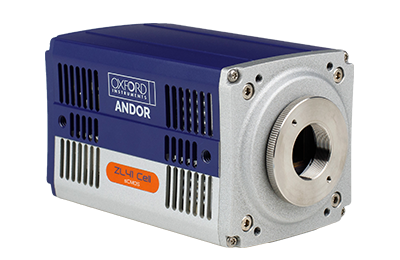
Andor CB2 is an ultra-high performance scientific camera integrating Sony sCMOS sensors specifically designed for research and applications requiring flexibility, speed and low noise. The CB2 series offers a spectral sensitivity from 200 to 1000 nm with resolutions ranging from 0.5 MP to 24.5 MP. Its internal liquid cooling will enable the study of phenomena in the most light-starved conditions.

NEW! CB2 for WFS a windowless variant designed for Adaptive Optics & Wavefront Sensing

View Brochure Request Pricing
Andor CB2 sCMOS Series

Why CB2 Series?

NEW! The CB2 for WFS is a windowless sCMOS camera purpose-designed for adaptive optics and Shack-Hartmann wavefront sensing. By eliminating the glass window between the sensor and microlens array, it enables tighter spot formation, reduced defocus, and improved wavefront measurement accuracy. The windowless design also suppresses ghost reflections, while maximizing photon throughput and centroiding precision. Its architecture supports easier integration, tighter optical coupling and can reduce the need for relay optics,

Low Noise

The massively parallel readout architecture and optimised pixel design enable CB2 to achieve readout noise as low as 1.4 to 2.6 e⁻, depending on the sensor, while maintaining maximum speed and full dynamic range. Ideal for live cell microscopy, high dynamic range measurements, and low atom number quantum gas fluorescence imaging.

Low Dark Current sCMOS

CB2 uses sensor cooling down to -40°C to minimise dark current. Combined with low amplifier glow from the stacked chip design, this enables longer exposures of up to several hours. This increases application flexibility and is ideal for long-exposure luminescence measurements and astro-photometry.

Global Shutter

In global shutter mode, all pixels expose simultaneously before charge is transferred for readout behind the scenes. Also known as Snapshot exposure, it is ideal for imaging fast processes without spatial distortion and for demanding fluorescence microscopy applications requiring synchronised peripheral equipment.

Temperature Management

Air cooling provides effective cooling to -5°C for most applications. Liquid cooling boosts cooling down to -40°C providing the lowest possible dark current at long exposures*. For vibration-sensitive applications such as electrophysiology, the fan can be completely disabled to eliminate vibration and acoustic noise.

*Cooling capability does not apply for the CB2 for WFS variant.

CB2 High Res

Featuring a 24.5 MP back-illuminated sensor for exceptional detail and long exposure performance with 2×2 on-chip binning for improved signal-to-noise ratio. Provides outstanding image quality for detailed scientific studies.

  • High resolution
  • Back-illuminated sensor
  • Low temperature qualified

CB2 High Speed

Optimised for rapid frame rates up to 1594 fps with resolutions ranging from 0.5 to 7.1 MP, this camera is perfect for high-performance, speed-critical experiments. Ideal for capturing fast processes with clarity.

  • High speed
  • Front-illuminated sensor
  • Low temperature qualified

CB2 UV

Specially optimised for ultraviolet imaging (200–400 nm), with quantum efficiency above 40% at 300 nm and high frame rates up to 194 fps. Designed for accurate UV imaging in demanding applications.

  • UV optimised
  • Back-illuminated sensor
  • Low temperature qualified

CB2 for WFS

Designed for demanding adaptive optics, the CB2 for WFS comes without a window and allows the integration of microlens arrays very close to the sensor. It is available across the entire CB2 Series (HR, HS & UV).

  • High speed & low noise
  • No ghost images
  • Maximises photon throughput

The table below summarises the key technical specifications for the CB2 High Res, CB2 High Speed and CB2 UV models, providing a side-by-side comparison of sensor format, spectral range, cooling performance and operational characteristics.

Model CB2 High Res CB2 High Speed CB2 UV
Sensor type Back illuminated stacked sensor Front illuminated sensor Back illuminated sensor
Active pixels (W x H) 5328 x 4608 CMOS
(24.5 MP)
3216 x 2208 | 1608 x 1104 |
816 x 624 CMOS
(7.1 | 1.7 | 0.5 MP)
2848 x 2848
(8.1 MP)
Pixel size
Pixel size with 2x2 on chip binning
2.74 µm
5.48 µm
9 or 4.5 µm
9 µm (7.1 model)
2.74 µm
5.48 µm
Sensor size (pixels) 19.3 mm diagonal 17.6 | 17.6 | 9.2 mm diagonal 11.2 mm diagonal
Maximum quantum efficiency 74 % 74 % >50% at 300 nm (UV) & >70% at 500 nm (visible)
Air cooling -5°C (@ +25°C ambient)
Liquid cooling -20°C (@+25°C liquid)
-40°C (@ +5°C liquid)*

*With lower temperatures of water/liquid coolant, please pay particular attention to the dew point, such that the relative humidity and temperature conditions of the environment do not result in condensation being formed on cold surfaces within the camera and risking damage to the camera electronics. Air and liquid cooling not available for CB2 for WFS variant.

NEW! CB2 for WFS is available across the entire CB2 Series (CB2 High Res, CB2 High Speed & CB2 UV)

Related Applications

On one hand, adaptive optics systems rely on fast and precise feedback loops to correct for atmospheric turbulences. On the other hand, Laser Guide Stars (LGS) require sensitive and high-speed sensors to track wavefront distortions in real time. The CB2 High Speed is engineered to meet these demands. The camera delivers high frame rates up to 1595 fps (full resolution) combined with a global shutter to avoid any motion-induced distortion and very low readout noise. In addition, the CB2 High Speed offers an optimised quantum efficiency at 589 nm that is the sodium excitation peak for artificial stars. The CB2 High Speed supports CoaXPress and GigE Vision interfaces, enabling precise triggering, highthroughput data acquisition over long distances and simple integration into existing adaptive optics systems.

Several strands of astronomy require constant survey of large areas of the sky, monitoring for photometric or astrometric variability. This can encompass Space Domain Awareness, Exoplanet Discovery and NearEarth Object (NEO) detection. The large field of view, high resolution and high sensitivity of CB2 High Res means it is well suited to such challenges, either directly visualised or by occultation. Deep cooling and associated dark current minimisation, alongside the low amplifier glow of the stacked back-illuminated sensor, complements usage over a wide exposure range. Fast sensor readout means minimal deadtime between consecutive exposures and minimal photon wastage, whereas the global shutter is ideal for spatially referencing moving objects against star backgrounds with temporal accuracy.

Ions such as Calcium and Magnesium serve as vital cofactors for processes within cells. The dynamics and localisation of specific ions within living cells are therefore of interest to many studies, from the fundamentals of the cell machinery itself, to various disease states. Ion imaging has been made possible by development of various fluorescent dyes, and genetically encoded proteins that respond to ion concentration. To image calcium sparks and waves a fast and sensitive sensor is vital. CB2 combines a sensitive global shutter sensor with exceptional imaging speeds achieving true temporal accuracy across the full field of view.

Ideal for detecting defects and structural variations with submicron resolution. Its global shutter combined with its very low readout noise ensure highcontrast and distortion free imaging of fast-moving wafers on a conveyor belt. Whether it is for photoresist inspection, overlay metrology or even process uniformity analysis, CB2 UV is a strong ally for the semiconductor industry.

Camera Spotlight

sCMOS Cameras

Andor’s Scientific CMOS (sCMOS) cameras series deliver an advanced set of performance features that render them ideal for high fidelity, quantitative scientific measurements. Providing a wide gamut of application advantages across the biological sciences, the multi-megapixel cameras offer a large field of view and high resolution, without compromising read noise, dynamic range or frame rate.

Learn More